
Weekly 3D Printing & CNC Brief — September 12, 2026
Four practical manufacturing updates from September 2026: a new approach to metal support removal, embedded sensing in titanium, a damage-tolerant floating lattice, and CNC/CAM workflow improvements.
This week’s brief looks beyond headline machine specifications. The common thread is control of the difficult steps around production: post-processing, in-process functionality, structural design, and the transfer of design intent into machining.
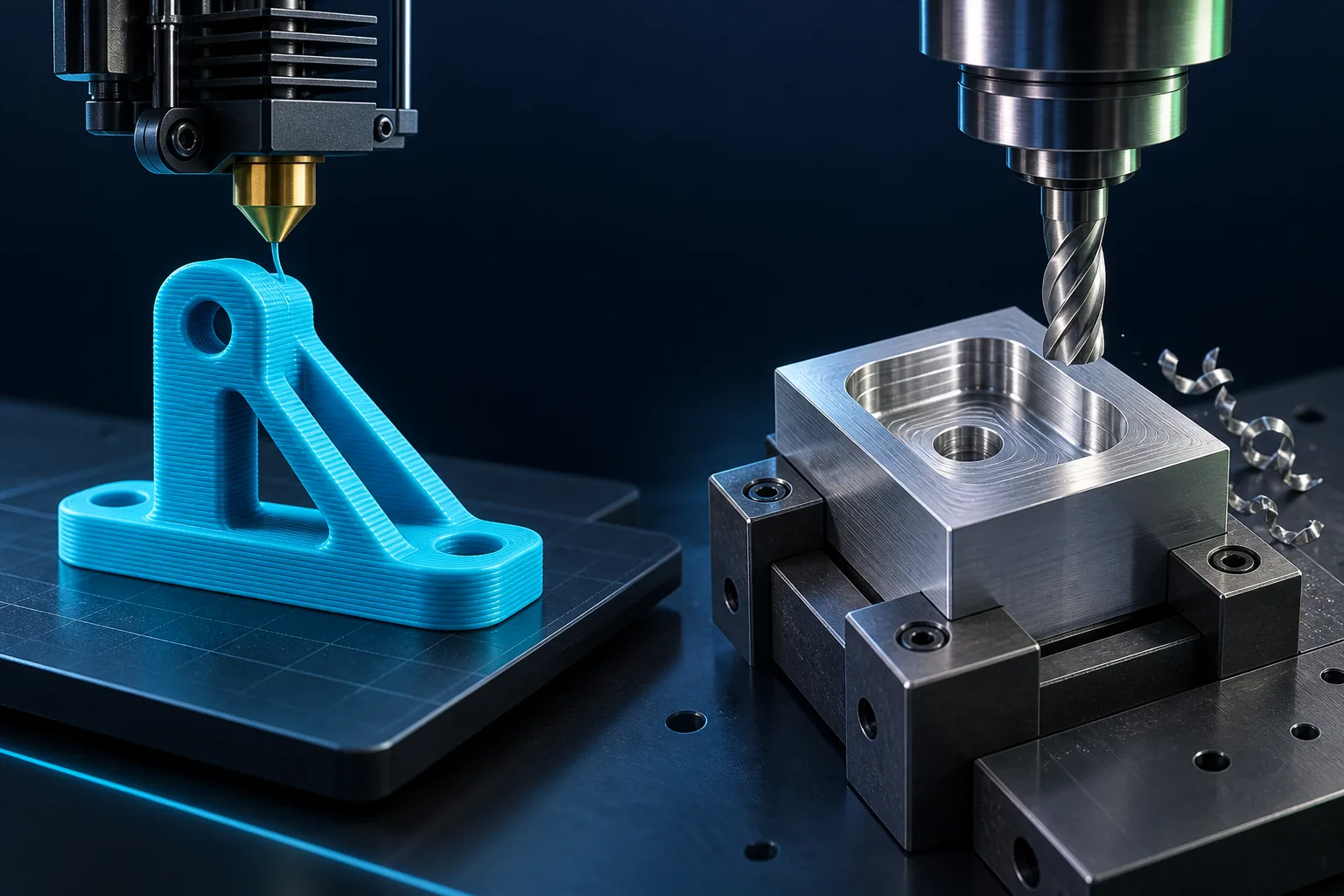
At a glance
- Ultrasonic support removal: targets a slow and inconsistent post-processing step in metal additive manufacturing.
- Embedded strain sensing: moves measurement capability inside laser powder-bed-fused titanium structures.
- Buoyant titanium lattice: combines an open metal structure with sealed foam-filled cells.
- Polar machining and PMI updates: reduce CAM workarounds and help preserve manufacturing intent.
1. Ultrasonic vibration targets metal support removal
Fraunhofer IAPT announced a method that couples high-frequency mechanical vibration into a printed metal component. The support geometry is designed so that selected structures resonate and experience local stress peaks at their attachment points. The institute reports that supports can detach within minutes without manual cutting.
The practical significance is post-processing. Support removal can add labour, variation, and exposure to metal dust after the build has finished. A controlled vibration-based step could make the workflow more repeatable, especially for delicate or difficult-to-reach supports.
Reality check: this is an announced research process with a public demonstration planned for Formnext 2026. Its performance across different alloys, geometries, surface requirements, and production volumes still needs application-specific validation.
2. Titanium parts gain embedded strain sensing
A peer-reviewed study in Communications Materials reports multilayer strain-sensing architectures embedded directly in Ti-6Al-4V during laser powder-bed fusion. The researchers combined printed polymer–metal gauges with powder-mediated thermal protection and evaluated four sensor architectures.
The reported sensors retained electrical function and strain-sensing performance under mechanical loading while the surrounding metal maintained structural integrity. This points toward components that can monitor their own mechanical state rather than relying only on sensors bonded to an exterior surface.
Maker takeaway: the important idea is design for function during the build. Additive manufacturing can become a method for integrating sensing, channels, or interfaces—not only producing an outer shape. This remains advanced research, not a general desktop-printing technique.
3. A damaged titanium lattice can still float
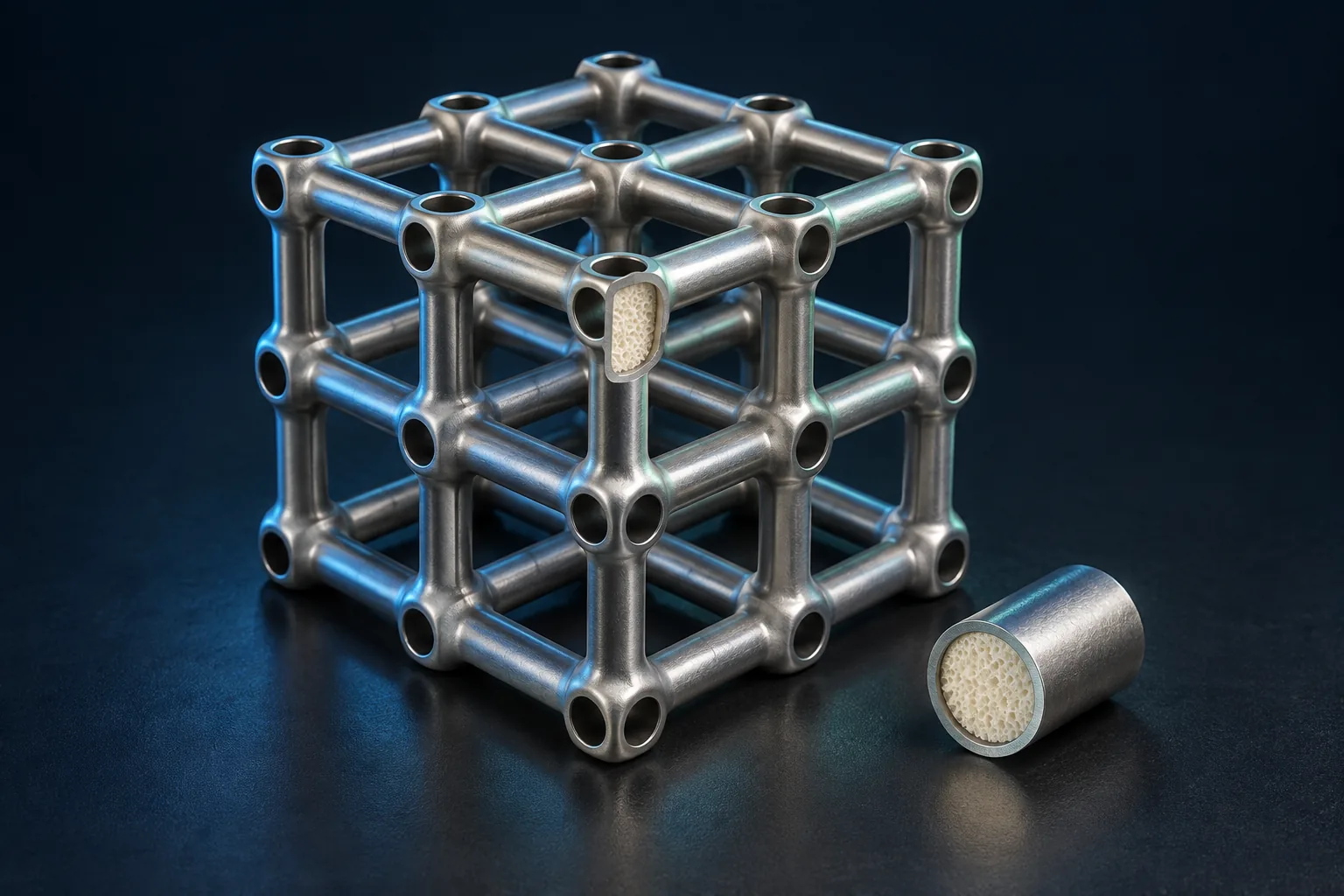
RMIT University reported a metal–polymer lattice made from hollow, interconnected 3D-printed titanium struts filled with polyurethane foam. The foam seals small internal cells while water can still pass through the open lattice. In laboratory tests, samples remained buoyant after cracking and other damage.
The team also introduced “skeletal density,” which considers the material that excludes water rather than the full open volume. That is a useful design lesson: for open structures, apparent bulk density may not predict flotation.
Reality check: the work is a laboratory prototype. The researchers identify scale-up and long-term marine testing as next steps, so it should not yet be treated as a field-qualified replacement for conventional marine structures.
4. CNC software reduces rotary-machining workarounds
The September 2026 Fusion update adds polar machining to the core CAM workflow. For compatible mill-turn operations, rotary motion can help reach features that are difficult to access with linear travel alone. The release also expands product manufacturing information (PMI), including automatic hole and thread documentation and manufacturing notes attached to model geometry.
The broader lesson is model-based manufacturing. Keeping tolerances, thread details, and process intent connected to geometry can reduce repeated data entry between design and machining. Shops still need post-processor verification, simulation, workholding checks, tool-clearance checks, and a controlled first run before code reaches a machine.
What connects these updates?
- Post-processing is part of the process: a fast print is not a fast finished part if support removal is slow or inconsistent.
- Function can be embedded: sensing and internal material architectures are becoming design variables.
- Validation remains essential: promising laboratory results must be separated from production-ready capability.
- Digital intent must survive handoffs: CAM and PMI tools are most valuable when they reduce ambiguity without skipping simulation and inspection.
Sources
- Fraunhofer IAPT — Support Structure Removal Using Ultrasound, September 10, 2026.
- Communications Materials — Embedded multilayer strain architectures in additively manufactured titanium, September 9, 2026.
- RMIT University — Engineers create a world-first in floating titanium, September 3, 2026.
- Autodesk Fusion — September 2026 update, September 10, 2026.
Sources accessed September 12, 2026. Product and research claims are attributed to their original publishers; EZ Maker 3D has not independently validated the reported test results.